You've done the work. You've split your lapsed customers from your actives, your high-AOV buyers from your one-time purchasers, your engaged openers from the dormant half of your list. You've built the flows and set the rules. And your recovery rates are still flat.
The problem is your email segmentation tells you who's on your list and what they've done. They don't tell you who's in a buying moment right now. That's not a gap in your execution, it's merely a limitation of how segmentation works. And until you see it clearly, you'll keep optimising the wrong thing.
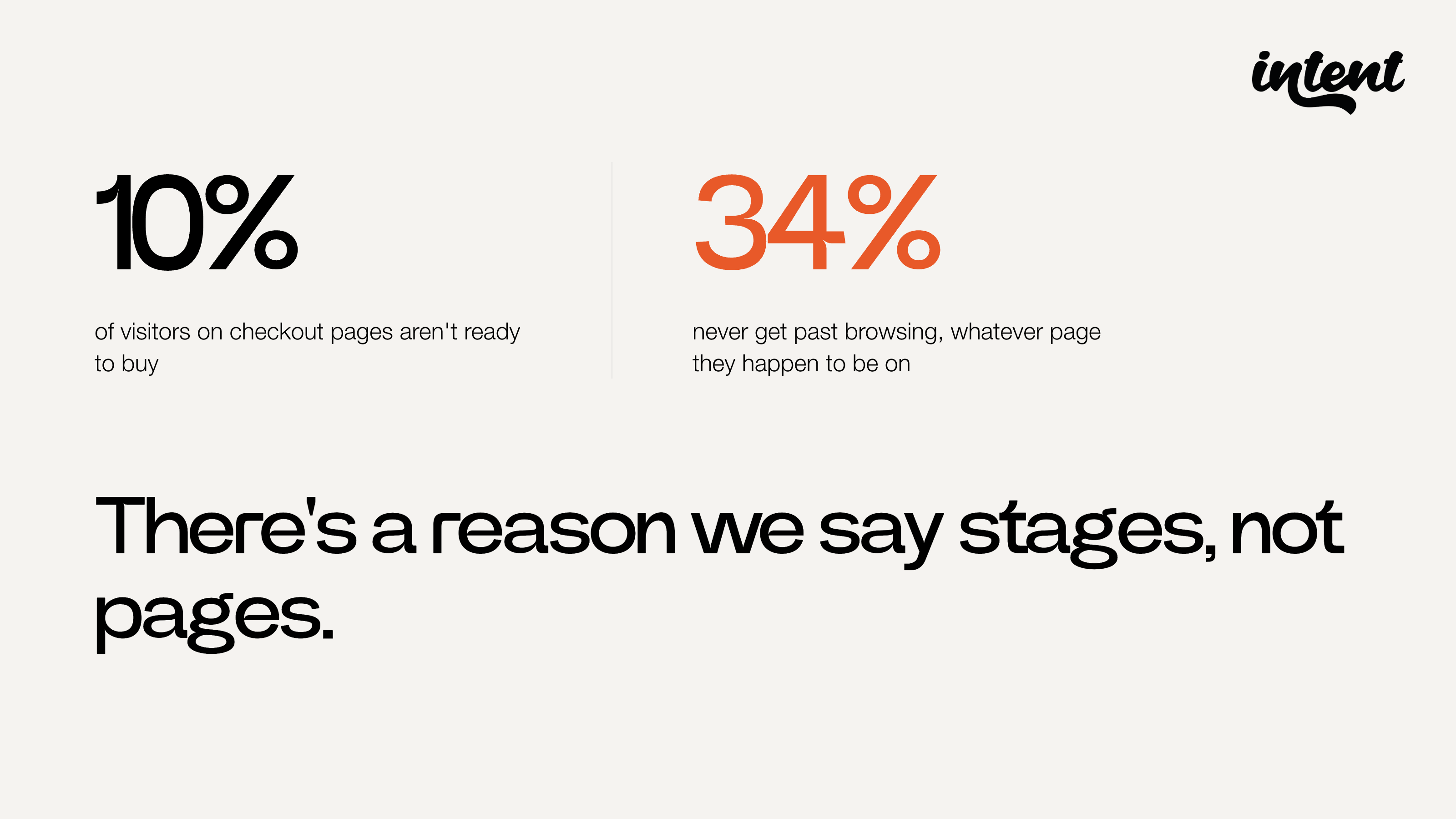
Email segmentation is built on historical data. Purchase history, past engagement, demographic profile. It tells you who someone was. But, it doesn't tell you what they're about to do. The signal that tells you whether someone is actively considering a purchase right now is a different kind of data entirely and it lives somewhere most email strategies never look.
What email segmentation actually tells you
Standard email segmentation is genuinely useful. Don't let the argument of this article dispel this notion.
When you split your list by purchase history, you're identifying category affinity and buying patterns. When you score subscribers by recency, frequency, and monetary value, the classic RFM model, you're surfacing the customers most likely to respond to an offer at a population level. When you tag customers by product category or browsing history, you can send more relevant messages than a broadcast to everyone.
These are real improvements. A CRM manager who has moved from bulk email to properly structured behavioural segmentation has genuinely raised their ceiling. Open rates improve. Revenue per send goes up. Unsubscribe rates come down.
However, segmentation is a map of things that have already happened. It's also focused on past behaviours, i.e. when someone has already signed up for an email. The ability to act immediately simply isn't there.
Your post-purchase segment tells you someone bought. Your lapsed segment tells you they haven't bought recently. Your engagement segment tells you who opened your last campaign. None of it tells you which of those subscribers is actively considering a purchase right now, in this session, having visited your site three times this week to look at the same product.
That's the gap. And it's why flat recovery rates survive even well-built segments.
The gap: why past behaviour isn't the same as present intent
To understand why this matters practically, you need to separate two things that email marketing tends to conflate: who someone is on your list and where they are in their buying journey right now.
There are two dimensions to this: the in-session signal (what this person is doing right now) and the broader buying window (are they actively in the market at all?). Standard segments miss both.
The historical data problem
Think about RFM. A customer in your "champions" segment (high recency, high frequency, high value) is someone you'd rightly treat as a priority. But their segment tells you they've bought before and bought recently. It doesn't tell you whether they're actively considering a purchase today. They might be. They might also have bought what they needed last month and have no intention of buying again for six weeks.
RFM is excellent at predicting which customers are likely to respond to a campaign over time, at a population level. It isn't designed to tell you which specific customer is in an active buying moment right now. Those are different questions, and treating the first as a proxy for the second is where the gap opens.
The engagement data problem
The standard workaround is engagement-based segmentation: split your list into openers and non-openers, active and inactive, and weight your sends accordingly. The principle is sound. The inputs have a serious problem.
Since Apple introduced Mail Privacy Protection with iOS 15 in September 2021, a proportion of email opens have been pre-fetched by Apple's servers rather than triggered by a subscriber actually opening the email.
According to Litmus's email client market share data, over 50% of email opens now occur on devices with Apple's Mail Privacy Protection activated. For UK fashion, beauty, and home retailers, where iPhone dominates device usage, the proportion of affected opens on your list is likely significant.
If your engagement-based segments were built or last reviewed before late 2021, it's worth auditing what proportion of your "engaged subscriber" definition rests on open rate signals and whether click and conversion data could give you a more reliable proxy. However, this isn't us saying "abandon engagement segmentation". We're saying you've got a reason to check that your inputs still mean what you think they mean.
The timing problem
Even if your segment is perfectly accurate, it doesn't solve the timing problem.
Suppose you have a genuinely high-intent customer: they're in market, they've been browsing your site, they're ready to buy. If that customer is in your 60-day lapsed segment, they'll receive your win-back flow on whatever cadence that flow runs. If they're in your post-purchase segment, they'll receive your next post-purchase email at the point the flow schedules it.
Neither of those flows asks: is this person ready to buy today? The segments tell you who to send to. They don't tell you when that person is receptive, or when they're actively in the middle of a buying decision that the right message could tip.
What "ready to buy" actually looks like
Buying intent doesn't show up in your CRM. It shows up in behaviour, but not in the way most email strategies assume.
The instinct is to look for observable signals: a customer who's visited the site twice this week, spent time on the outerwear category, or added something to their basket and removed it again.
These patterns feel meaningful, and they are. But they're proxies. They approximate intent rather than measure it. And proxies are very good at generalising.
Return visits to the same category could mean active consideration. It could also mean idle browsing, research with no near-term purchase plan, or a customer who's decided not to buy and is still processing why. Two customers can leave identical behavioural footprints with completely different intent trajectories.
The distinction that matters here is between an intent proxy and an intent prediction.
A proxy uses a single observable signal. So, page views, return visits, time on site, as a way to characterise specific behaviours.
A prediction uses hundreds of behavioural signals together. Things like scroll patterns, hesitation, comparison behaviour, click timing, revisit frequency, and models the probability that a specific visitor, right now, is likely to purchase.
That difference matters for email specifically because your flows are triggered on schedule, not on signal.
Consider a customer in your 90-day lapsed segment. Their segment says win-back flow, probably with a discount. But a real-time intent prediction across their session behaviour might tell a different story: they returned twice this week, built strong product affinity for outerwear without adding to cart — affinity that was visible well before any CTA click — and their intent has been rising, not falling, across the session.
That isn't a lapsed customer who needs persuading. Instead, it's someone ready to buy. They don't need a discount at all.
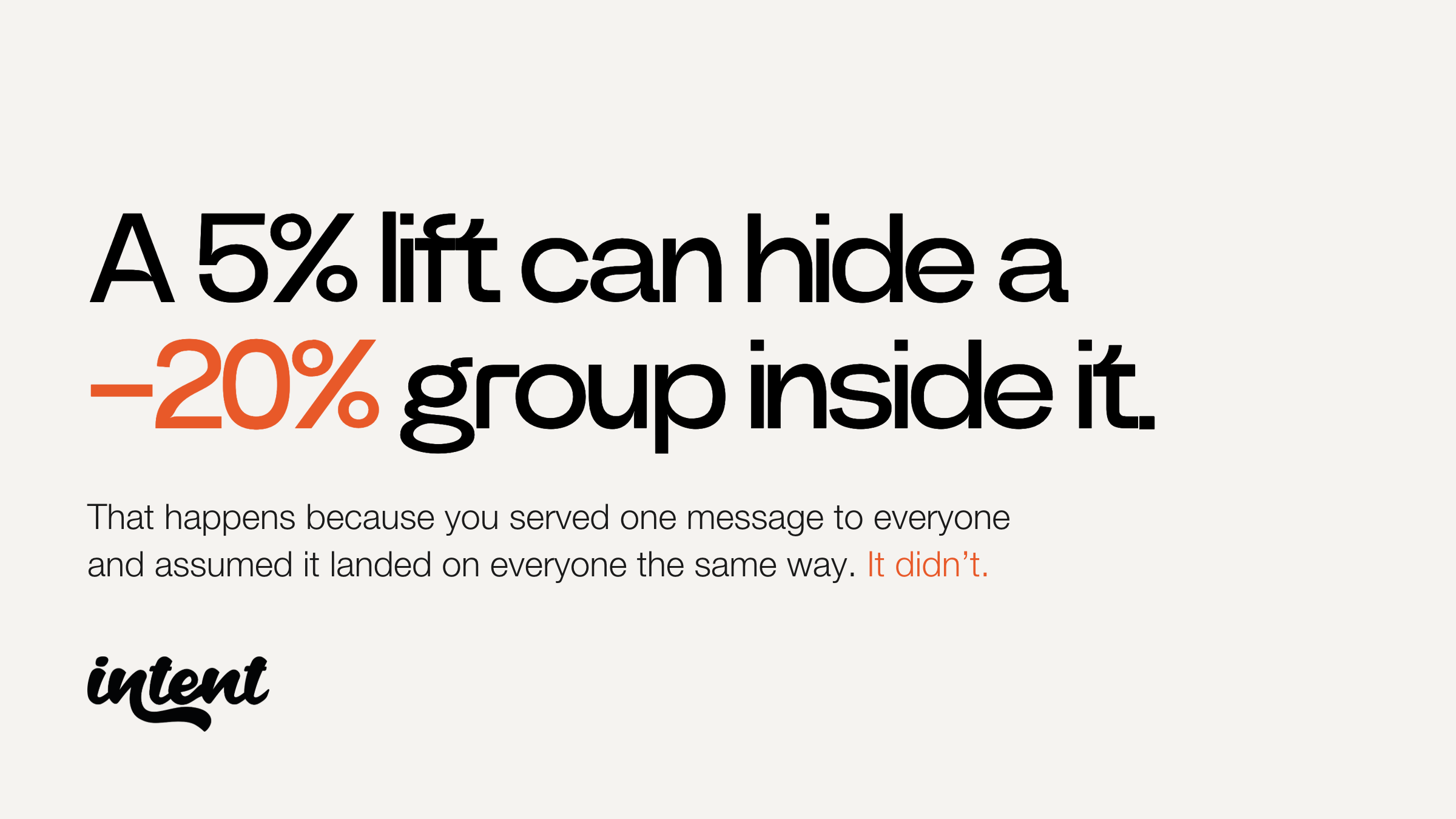
If you're offering discounts to people like that, all you're doing is eroding your margin. And let's just play with some numbers for a second. If you have a £120 average order value, a 20% discount on sale you would've made anyway costs you £24 pounds for that one sale. But it also costs for every single customer you've offered the same discount to.
Your email strategy can see who someone is and what they've done before. It can't see the modelled probability that they will purchase today. That requires a different layer of data entirely. (Spoiler: It's Made With Intent)
How to close the gap between your CRM and what's happening on-site
There are three ways to close it, and it's worth being honest about what each one costs.
1. Layer session behaviour onto send triggers — trigger sends based on a real-time on-site event rather than a profile segment on a schedule. If your ESP is Klaviyo, the ActiveOnSite flow trigger gets you closer. You're still dependent on session-entry events rather than continuous in-session behavioural signals, but it's a step in the right direction.
2. Prioritise timeliness over segment precision — tighten the timing of your event-based flows. Klaviyo's 2024 abandoned cart benchmark report, covering more than 143,000 flows, recommends sending the first recovery email within 2-4 hours of abandonment. Most brands set this window far wider. The window of peak intent closes faster than most email schedules assume.
3. Use intent-based scoring to qualify your existing segments — add a signal layer on top of your CRM segments that identifies which subscribers are currently showing on-site behaviour indicating an active buying moment. Platforms like Made with Intent analyse hundreds of behavioural signals in real time: return visit frequency, product page depth, comparison behaviour, session patterns. The result is a send informed by both who the customer is and where they are right now.
What this means for how you build segments
Audit your current flows against three questions:
- What is the trigger? Profile rule, onsite event or intent prediction?
- Does it rely on open rate engagement? If built before 2021, review whether click/conversion data could replace open rate as the proxy.
- Is it event-led? Tighten the send window to match the actual window of intent.
The question your segments can't answer
The most commercially important question: is this person ready to buy right now, isn't answered by a session behaviour alone. It's answered by a prediction built across hundreds of behavioural signals in that session, continuously updated as the customer moves.
That's not something a segment can produce. And it's not something a single observable proxy can substitute for.
Want to learn more about intent-based selling? Grab yourself a demo.

Become an Intent Insider
Get subscriber-only insights we don't publish anywhere else and event invites before anyone else.
By submitting this form you agree to our (more than fair) terms.