%201.webp)
Deliver the right message at the right time by responding to intent

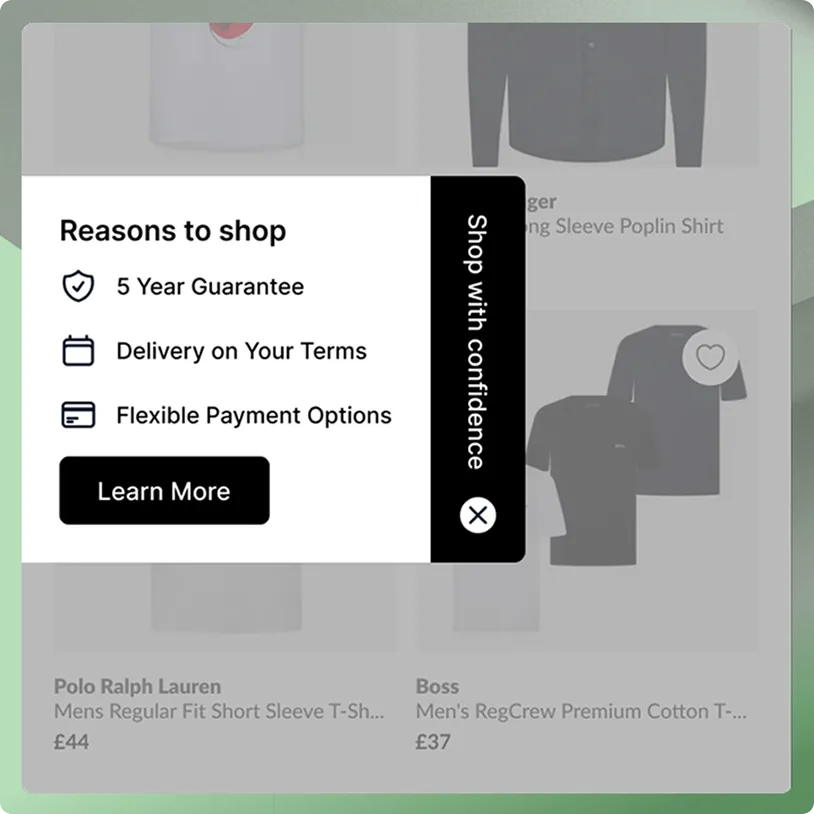
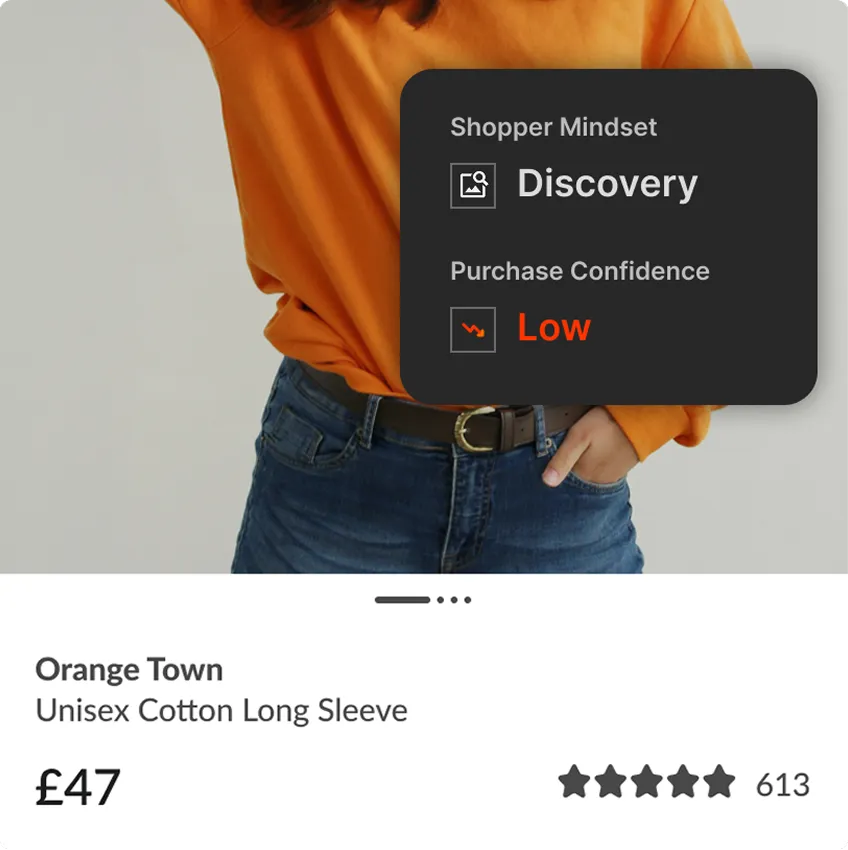
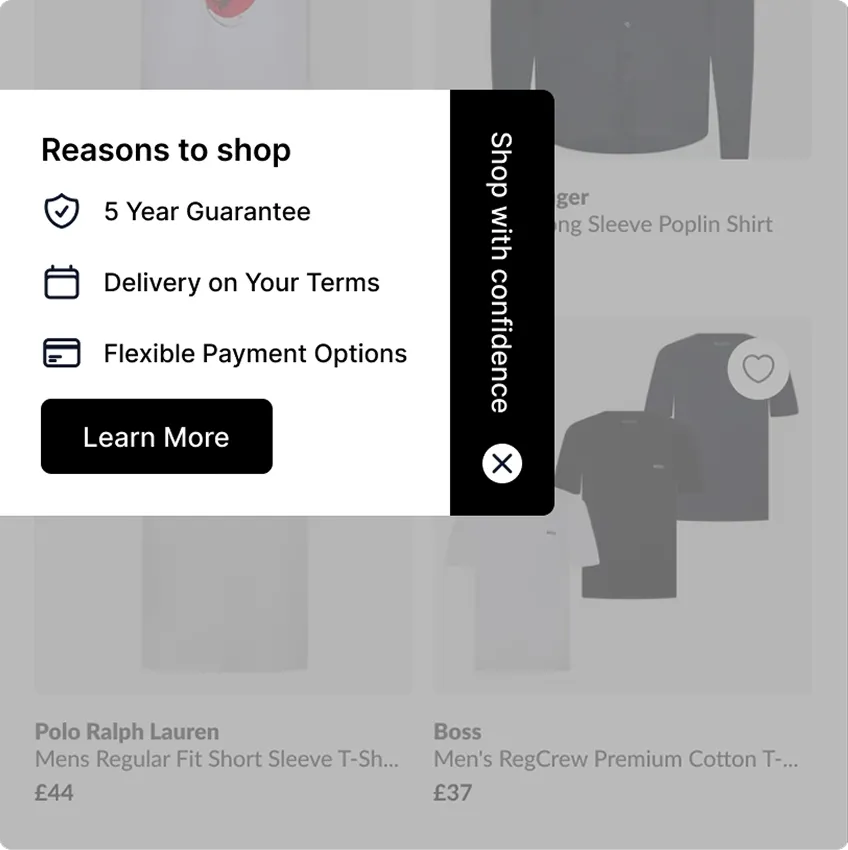
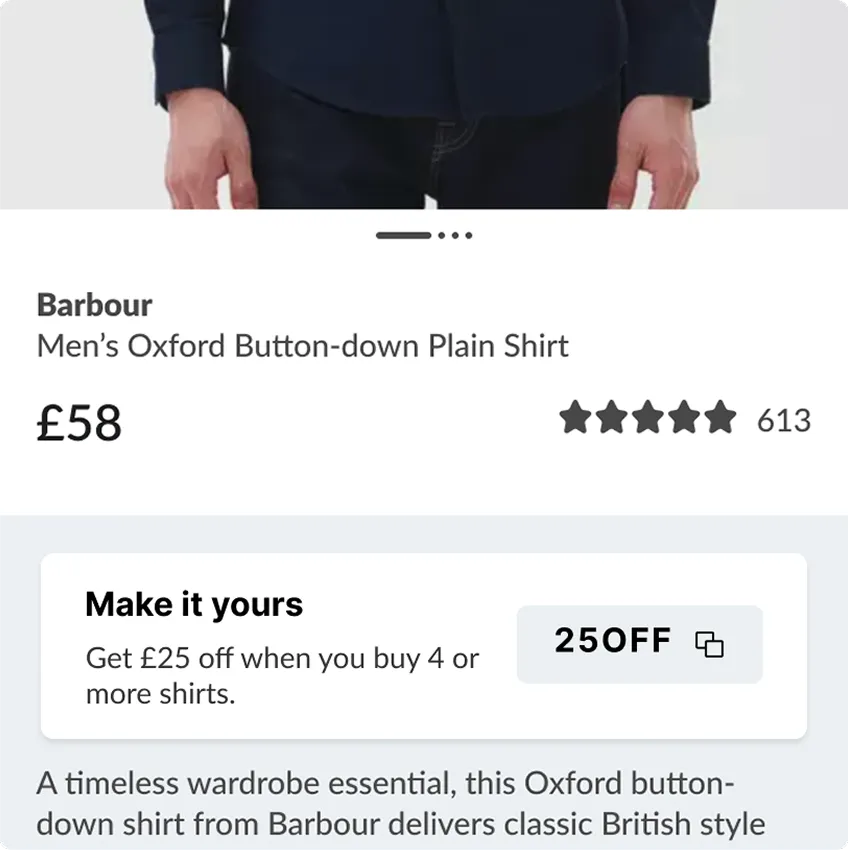
Our real-time optimisation agent
mirrors in-store timing and relevance


%201.webp)
Agentic Campaigns


Customer Spotlight



Works with (or without) the tools you already use


Launch intent-based messaging in minutes
Join the 100+ eCommerce brands using Intent


Frequently asked questions
What is personalised messaging in eCommerce?
Personalised messaging in eCommerce means showing different on-site messages to different visitors based on their behaviour and stage in the buying journey. Rather than displaying the same banner or USP to every visitor, personalised messaging adapts. A returning customer might see a loyalty prompt. A first-time visitor might see reassurance about returns. Someone hanging around on a product page might see delivery information that resolves a last-minute concern. The goal is to show the message most relevant to that visitor at that moment, not the one you think was most useful.
What types of on-site messages drive the most conversions?
Delivery information, urgency signals, social proof, and reassurance messages are consistently among the highest-converting on-site message types. Delivery messages answer the question most visitors are asking. Will this arrive in time? Urgency messages, when based on genuine scarcity or a real deadline, create momentum for undecided visitors. Reassurance messages about returns and guarantees address the risk perception that stops high-intent visitors from committing. The most effective approach is matching the message to what each visitor actually needs at that point in their session, not picking one type and showing it to everyone.
How do urgency and scarcity messages work, and when do they backfire?
Urgency messages work by making an available action feel time-limited. Think limited stock, a delivery cut-off, or a promotion ending soon. When the urgency is genuine, these messages add real value for a visitor who might otherwise hesitate and miss out. They backfire when the scarcity is false. A "only two left in stock" message that resets daily, or a countdown timer that restarts on page refresh, trains shoppers to distrust the message entirely. Once credibility is lost it is hard to recover. You should only use urgency messaging when you're being honest and are able to back it up.
What delivery messaging should you show on product pages?
The most impactful delivery messages answer the question visitors ask before they commit. When will this arrive? That means estimated or guaranteed delivery dates, same-day or next-day cut-off times, and free delivery messages. For high-consideration purchases, delivery certainty often matters as much as price. Visitors who are close to converting but uncertain about timing can be converted with confidence-building delivery messages shown at the right point in their session, rather than buried in a footer or on a separate delivery information page.
How do you personalise website messages without seeming intrusive?
The difference between personalisation that feels helpful and personalisation that feels intrusive usually comes down to timing and context. A message that appears before a visitor has had a chance to browse freely feels like an interruption. Messages that respond to something the visitor has already signalled, such as time spent on a product or a return visit, feels relevant rather than pushy. Using behavioural signals rather than demographic assumptions, and making sure the message offers something genuinely useful for where that visitor is in their journey, keeps personalisation on the right side of that line.
How can you tell which message to show each visitor at any given moment?
Most on-site messaging is decided by marketers in advance. A single banner goes live and gets shown to everyone. The visitor has no say in whether that message fits their context. A more effective approach reads visitor behaviour as it happens. It accounts for how long they have been on the site, which products they have engaged with, how many times they have visited, and whether they are showing signs of hesitation. Combining these signals lets you match the message to the visitor's actual state.