%201.webp)
Convert more product views by responding to visitor intent

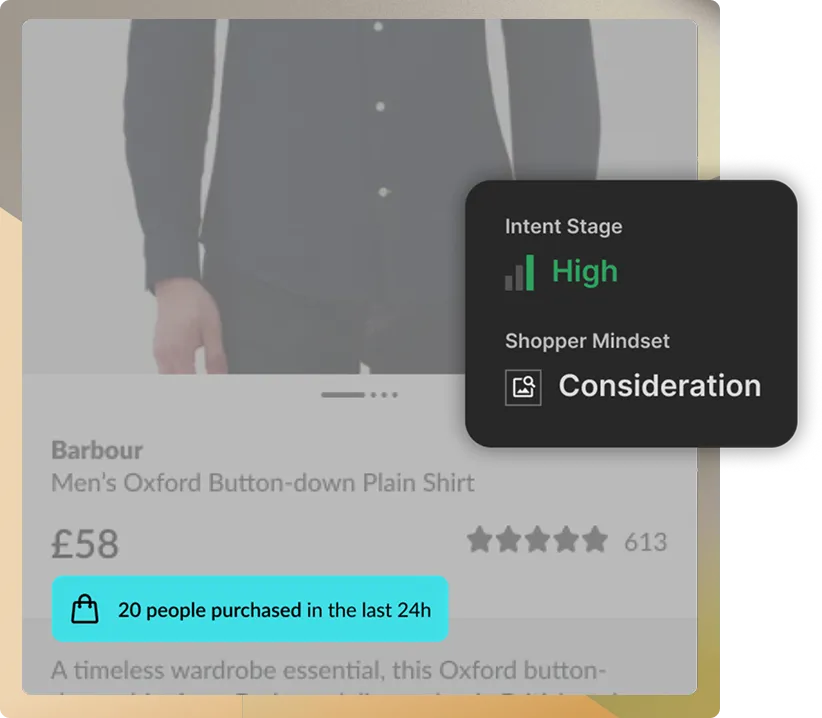
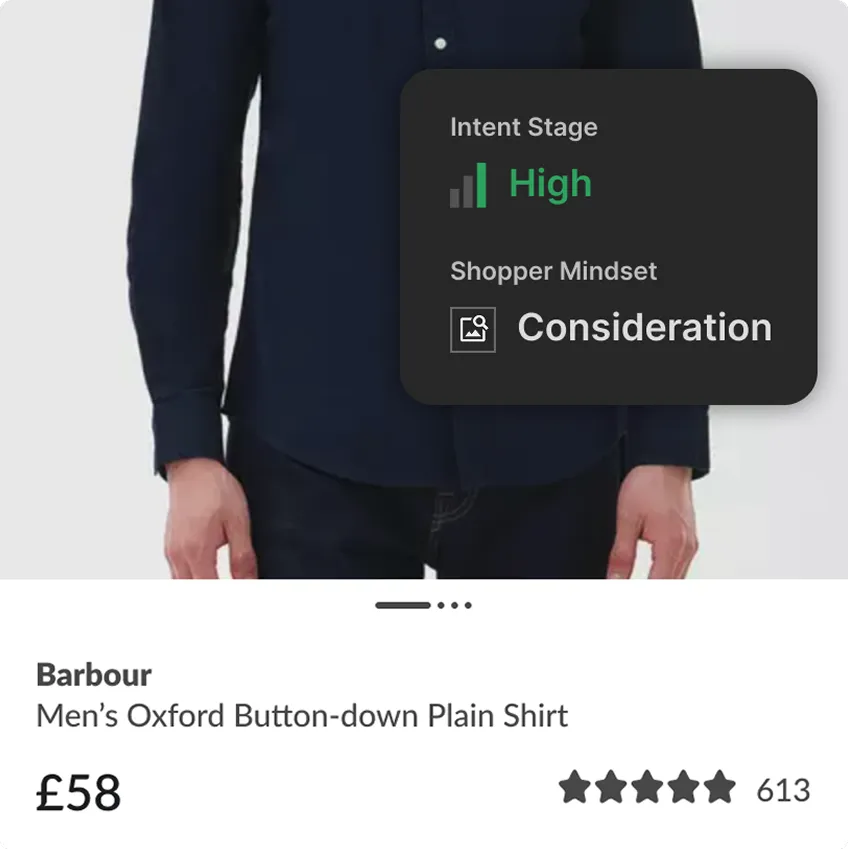
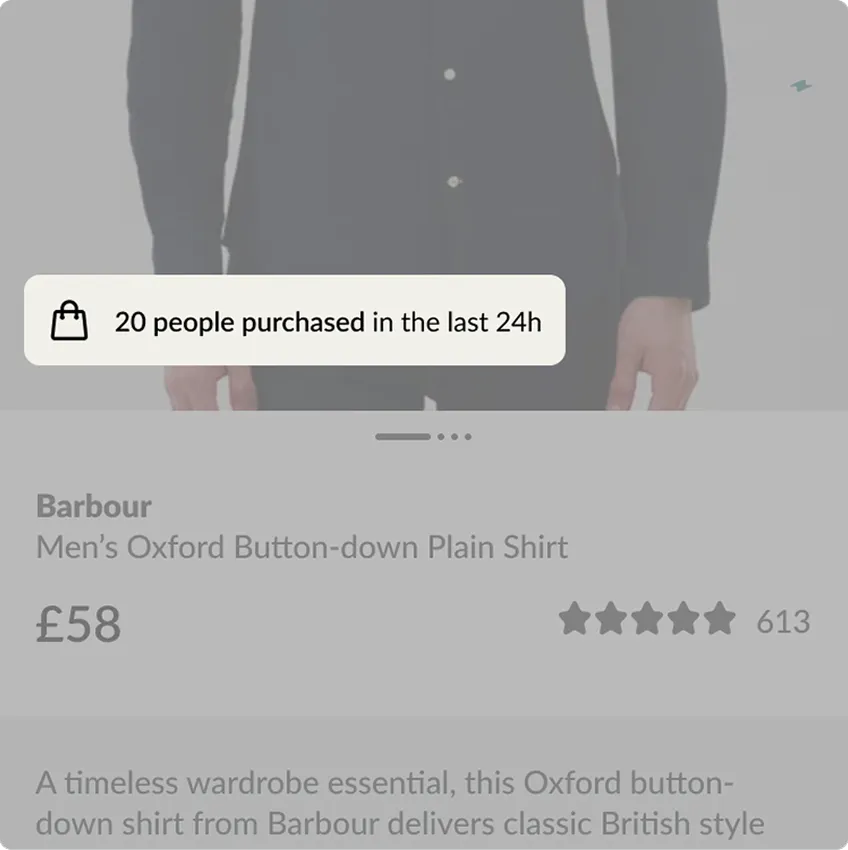
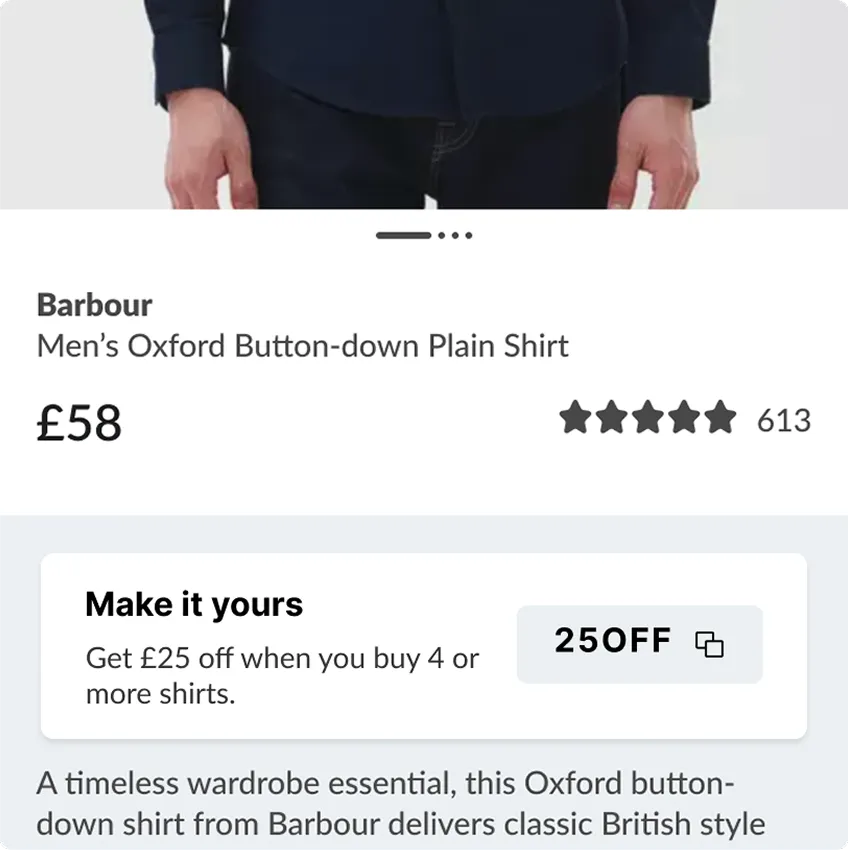
Our real-time optimisation agent
mirrors in-store timing and relevance


%201.webp)
Agentic Campaigns


Customer Spotlight



Works with (or without) the tools you already use


Product Visits FAQs
A product visit is when a shopper lands on a specific product detail page (PDP) during a browsing session. It marks the moment they move from general category exploration into considering a particular item. Most eCommerce analytics platforms track these as product page views or product page visits, and they matter because they represent a meaningful shift in intent. A visitor who has viewed a product page is further into their decision journey than one who has only browsed category or search results pages. Understanding what happens during those visits is where much of the real conversion opportunity lies.
Product pages have a lot of work to do. A visitor may be interested in a product but still have open questions about sizing, delivery times, returns, or whether the price feels right for them right now. They may still be comparing alternatives, or they may simply be early in their research, building a consideration set rather than ready to commit. That's normal buying behaviour, not lost revenue. The problem isn't that visitors leave. It's that most brands respond to every exit signal the same way, with a blanket intervention, without knowing which visitors were actually close to a decision and which ones were not.
No single action tells you. Someone who has spent several minutes on a product page, scrolled through the images, checked delivery information, and returned from category pages is a fundamentally different visitor from someone who clicked in and bounced in thirty seconds. Buying readiness is built from a combination of signals: time on site, page depth, product interactions, scroll behaviour, whether this is a first or returning session and many other signals. The more of these signals you can interpret together, the more accurately you can identify who is genuinely evaluating a purchase and who is still early in the journey, and respond to each accordingly.
No. Offering a discount to a visitor who was already going to buy hands away margin for nothing. For visitors who were never going to convert in that session, a discount rarely closes the gap. It may simply teach them to wait for an offer next time. The more useful question is what that specific visitor needs: reassurance on delivery, social proof from other buyers, a clearer answer to a sizing question. A discount is one response among several, and often not the most appropriate one. Which response is right depends on reading the intent behind the visit, not just identifying that someone is present on a product page.
A/B testing shows you which version of a product page performs best for your average visitor. That's useful, but it collapses your whole audience into one signal. A visitor browsing casually and a visitor one click from adding to basket both see the same winning variant, even though they're at completely different points in a decision. Personalisation responds to where each visitor is in the journey. Rather than finding one page that works adequately for everyone, the goal is to show each visitor what they need at that specific moment. That may be something entirely different from what drives performance in aggregate.
Historically, real-time on-site personalisation required engineering resource to build behaviour tracking, decision logic, and the experience layer on top. That made it slow and expensive to get right. The space has changed. Tools like Made With Intent handle the tracking and decision logic out of the box, letting eCommerce teams define what to show and to whom without writing a line of code. What previously needed a development sprint can now be live in a single session. The constraint is no longer technical. It is knowing what to show each visitor, and when. That is a content and strategy question, not an engineering one.
Launch intent-based personalisation in minutes
Join the 100+ eCommerce brands using Intent


