%201.webp)
Convert more returning visitors by adapting to their intent

Our real-time optimisation agent
mirrors in-store timing and relevance


%201.webp)
Agentic Campaigns


Customer Spotlight


Works with (or without) the tools you already use


Launch intent-based personalisation in minutes
Join the 100+ eCommerce brands using Intent


Returning visits FAQs
A returning visitor is someone who has visited your site before and comes back for at least one more session. They are distinct from unique visitors (anyone who visits at least once in a reporting period) and from returning customers (people who have actually completed a purchase). The distinction matters because a returning visitor still has not bought. They have shown enough interest to come back, but have not yet committed. That puts them in a very different commercial position from a loyal customer, and it calls for a different on-site approach. Most analytics platforms identify returning visitors through browser cookies, though cross-device browsing and private mode sessions can reduce the accuracy of that identification.
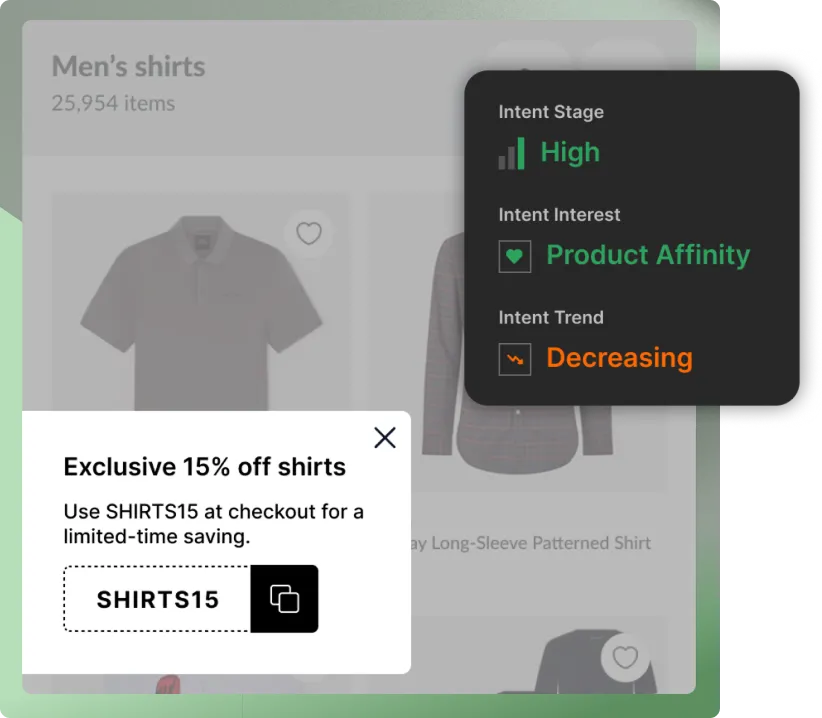
Most sites treat them exactly as they did on the first visit. The same homepage, the same prompts, and often the same product they already looked at. That repetition signals the site has not noticed them. But there is a subtler problem too. Returning visitors are not a uniform group. Some are close to a decision and need only a small nudge. Others are still comparing options and are not going to buy this session regardless. Treating every return visit the same misses the actual signal: where a visitor is in their decision journey, not just the fact that they have come back. Without that distinction, even well-intentioned personalisation misfires.
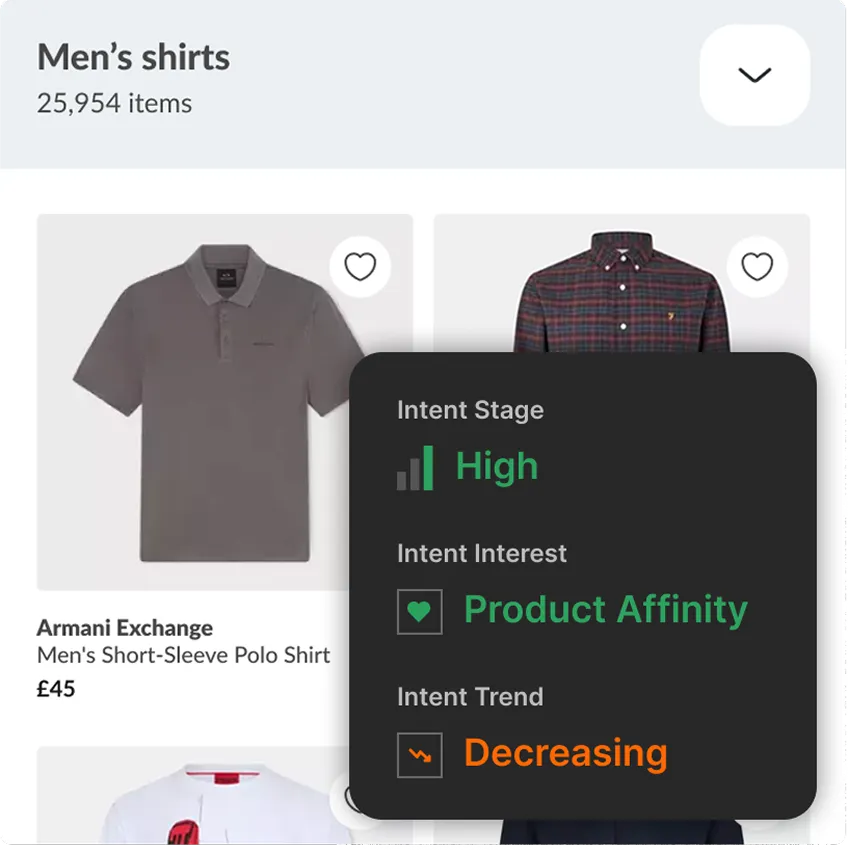
The last-viewed product is one of the weakest signals available. It tells you what a visitor clicked on, not whether they were seriously evaluating it. More useful signals come from patterns across sessions: which categories they keep returning to, how their attention has narrowed or broadened, how long they spent on specific pages compared to earlier visits, whether they added something to a basket and removed it, and whether their most recent session looks more focused. A visitor who has browsed the same category three times in a week is in a very different position to someone who glanced at one page and left. These patterns tell a far more honest story about readiness to buy.
They share the same commercial objective but work at entirely different moments. Retargeting reaches visitors after they have left your site, typically through paid ads on other platforms. On-site personalisation for returning visitors works while they are still browsing. The practical difference is timing — and timing is where most brands leave value on the table. An ad served the following day competes with memory loss, purchases made elsewhere, and intent that may have already shifted. An on-site experience during an active session responds to what is happening right now. The two approaches are not in conflict. But responding to intent while the visitor is still engaged is the earlier and, in most cases, the more effective intervention.
Start with returning visitor conversion rate, tracked separately from new visitor conversion. If you are running personalised experiences, you need to attribute changes to specific decisions rather than seasonal patterns or traffic shifts. That means controlled testing with a holdout group seeing the default experience wherever possible. Beyond conversion rate, look at session depth across multiple visits, time-to-purchase for visitors who take more than one session to buy, and whether the gap between first and final session is shortening. A returning visitor programme that cannot be tied back to measurable uplift is a design change, not an optimisation. The measurement structure should be in place before the experiences go live, not retrospectively.
Not by default, and not as a first move. A returning visitor who has not converted is not necessarily waiting for a discount. In many cases they are still comparing options, building confidence in your brand, or working out which product is right for them. Discounting at that point gives away margin on someone who may have bought at full price, and it trains visitors to hold out for an offer rather than buying when ready. The more useful question is what that specific visitor needs to progress. For some it is social proof. For others it is clearer information about delivery or returns. A discount is rarely the right first answer until you know what is holding them back.