MandM, a British online fashion retailer, captured 88% more email signups from their popups. They didn't rewrite the copy. They didn't redesign their site. They just changed when their message appeared.
How did they manage this? Simply, they made the switch from rule-based experience delivery, to an intent-based approach.
And the results across email capture and product recommendations tell a consistent story: rule-based experience delivery forces a single answer on a question that has many right answers.
Rigid, predefined rules can't answer those questions. Intent signals can. Improving the impact of your onsite experiences is all about sending the right message, at the right time to your customers. We'll show you how Ollie Wilson, Insights Activation Manager at MandM does this with Made With Intent.
Editor's note: This blog post is a write up based on our first Intent Live: How MandM maximise revenue per user with personalised experiences. The session was hosted by Ollie Wilson, Insights Activation Manager at MandM. He showed how Made With Intent helped deliver better, more appropriate experiences to his customers, getting 88% more email signups.
The problem with rules-based personalisation
Most eCommerce personalisation sits on top of a set of rules. A customer views a Product Landing Page (PLP), then two Product Display Pages (PDPs), then gets hit with an email capture popup.
Or they get served "last viewed" recommendations based on browsing history. Or a basket abandonment email fires after 10 minutes of leaving the site.
These rules work to a point. Delivering the same experiences to every visitor using predefined rules, based on what they've done before gives you a critical foundation, but it puts a ceiling on growth.
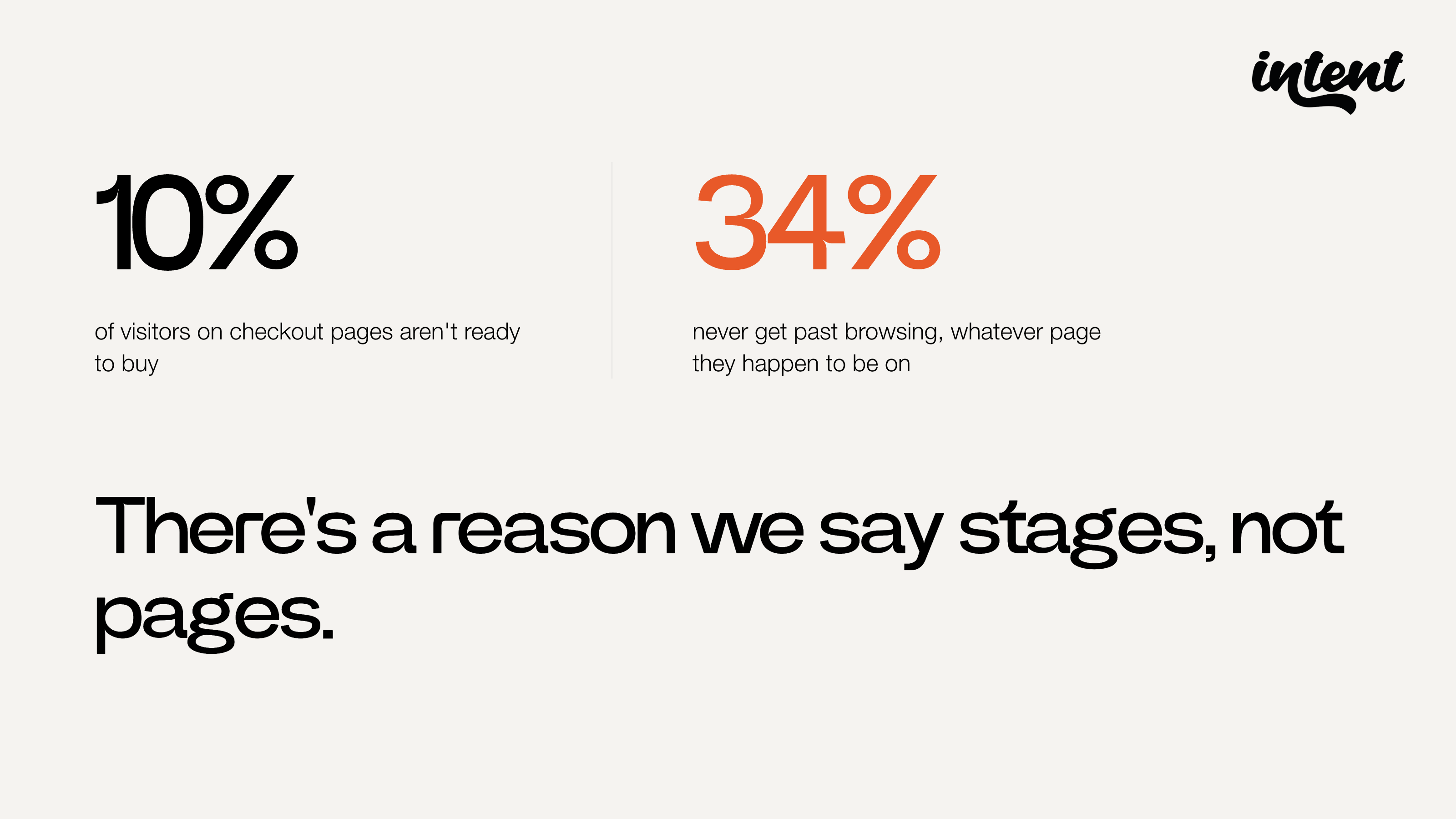
They treat the journey as a sequence rather than a state. And a customer's state when they trigger your rules can be completely different depending on who they are, why they're there, and what they're about to do.
MandM saw this clearly in their email capture data. Their rule-based popup was capturing emails, but they were seeing broken journeys. The pop-up was technically firing at the right moment in the sequence. It wasn't firing at the right moment for the person and their intent.
As Ollie Wilson, Insights Activation Manager at MandM, puts it:
"It's not necessarily specific things a customer does in the journey. It's more so the timing and intent really helped us leverage this in a more efficient way."
The argument we're making here is that it's key to make this distinction. Rules track what a customer has done. The moment for you to intervene has gone. Intent-based experience delivery is issued in real time, predicts what they're about to do, and allows you to take appropriate action.
Pop ups delivered at the right time
The email capture popup is one of the highest-value tools in eCommerce, but also one of the most frequently misused. Use it too early and you interrupt a customer who hasn't found a reason to stay yet. Fire it according to a fixed rule and you'll hit some customers at the peak of their interest, but most others at exactly the wrong moment.
Ollie and his team tested a different approach. Instead of triggering the popup after a visitor hit a fixed sequence of pages, they introduced intent signals to identify when a customer was building meaningful engagement.
When those signals crossed a threshold, the popup fired. Exactly at the moment the customer was most receptive.
When talking about this, Ollie said: "We were hitting them at the right time because we knew they were building intent. They were right at the peak of their journey. Whereas before we were very much relying on this rule-based system which potentially wasn't the right time."
The results across three metrics tell the story. And these figures are lifted directly from the numbers Ollie shared during Intent Live:
- 55% increase in email sign-up rate, the rate at which people served the popup chose to subscribe
- 88% uplift in total emails captured, the volume consequence of that improved rate
- 15% resubscription rate among previously unsubscribed customers
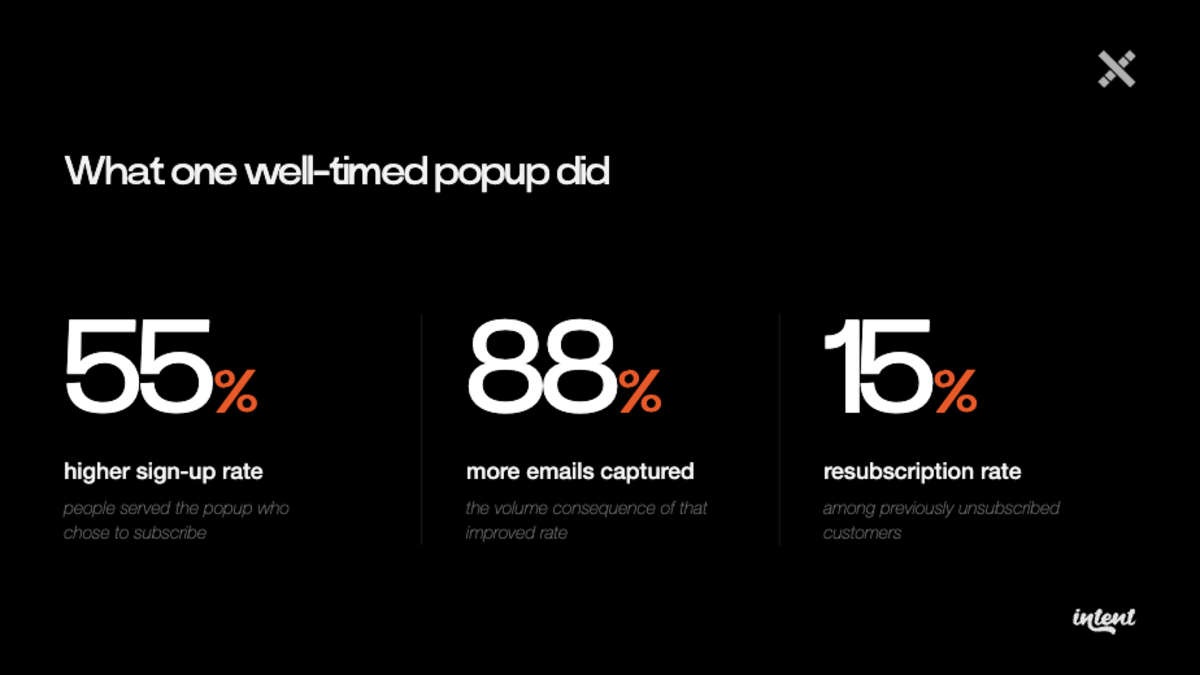
That last number is particularly significant. Lapsed customers don't re-subscribe because of a well-timed popup by accident. They re-subscribe because they were caught at a moment of genuine brand or product affinity, at the right time. This simply isn't possible with rules-based personalisation.
What MandM actually changed
What's actually surprising is how little MandM had to do to arrive at these results.
They were already using Bloomreach for their on-site experiences, including the consent popup. The popup itself, design, copy, offer, stayed exactly the same.
On changes, Ollie says: "To be honest, it was so easy. We already had our consent popup in Bloomreach as a web layer. It was just a trigger we had to change. With Made with Intent's integration being so easy, we could just feed all of the data into Bloomreach and then use that as the trigger for the popup rather than those stringent rule bases."
Agentic campaigns: testing 157 segment combinations at once
The email capture result came from MandM's first phase of work with intent signals. Their second phase went further, introducing a different kind of challenge.
MandM runs an active personalisation testing programme. At any given point, they're running recommendation strategy tests: last viewed versus category affinity versus the Bloomreach Loomi engine versus most popular, and so on.
Each test runs for roughly two weeks, produces results for a specific segment or device type, and then the cycle starts again.
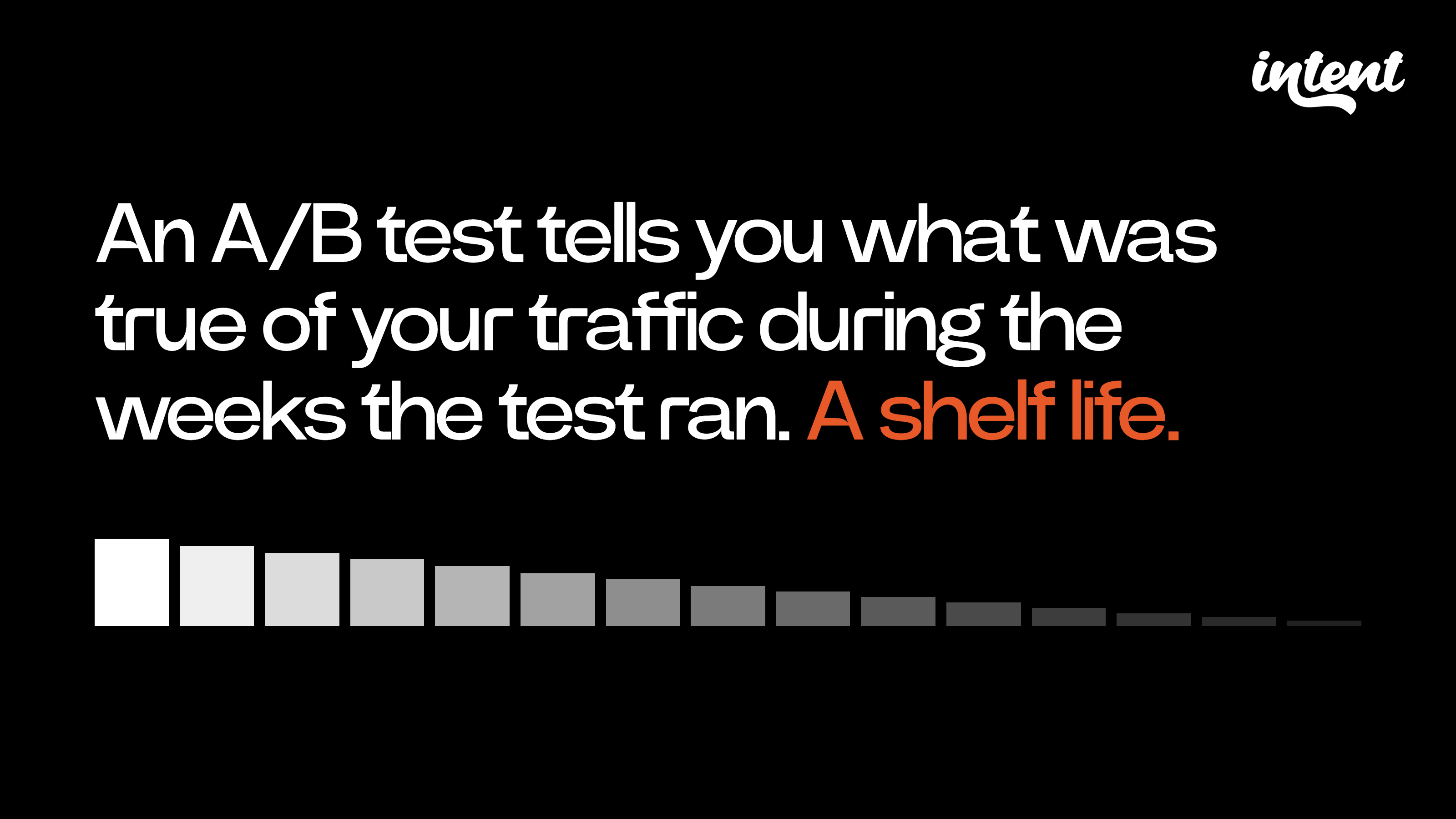
The problem isn't that the testing doesn't work. It's that it's slow. Each test answers one question, for one segment, in one context. And by the time you've worked through a few cycles, the results of the first test may not apply to the next season, the next acquisition cohort, or mobile versus desktop. And not to mention how resource intensive this all is.
Agentic campaigns changed this by running multiple recommendation strategies in parallel, doing the segmentation work automatically.
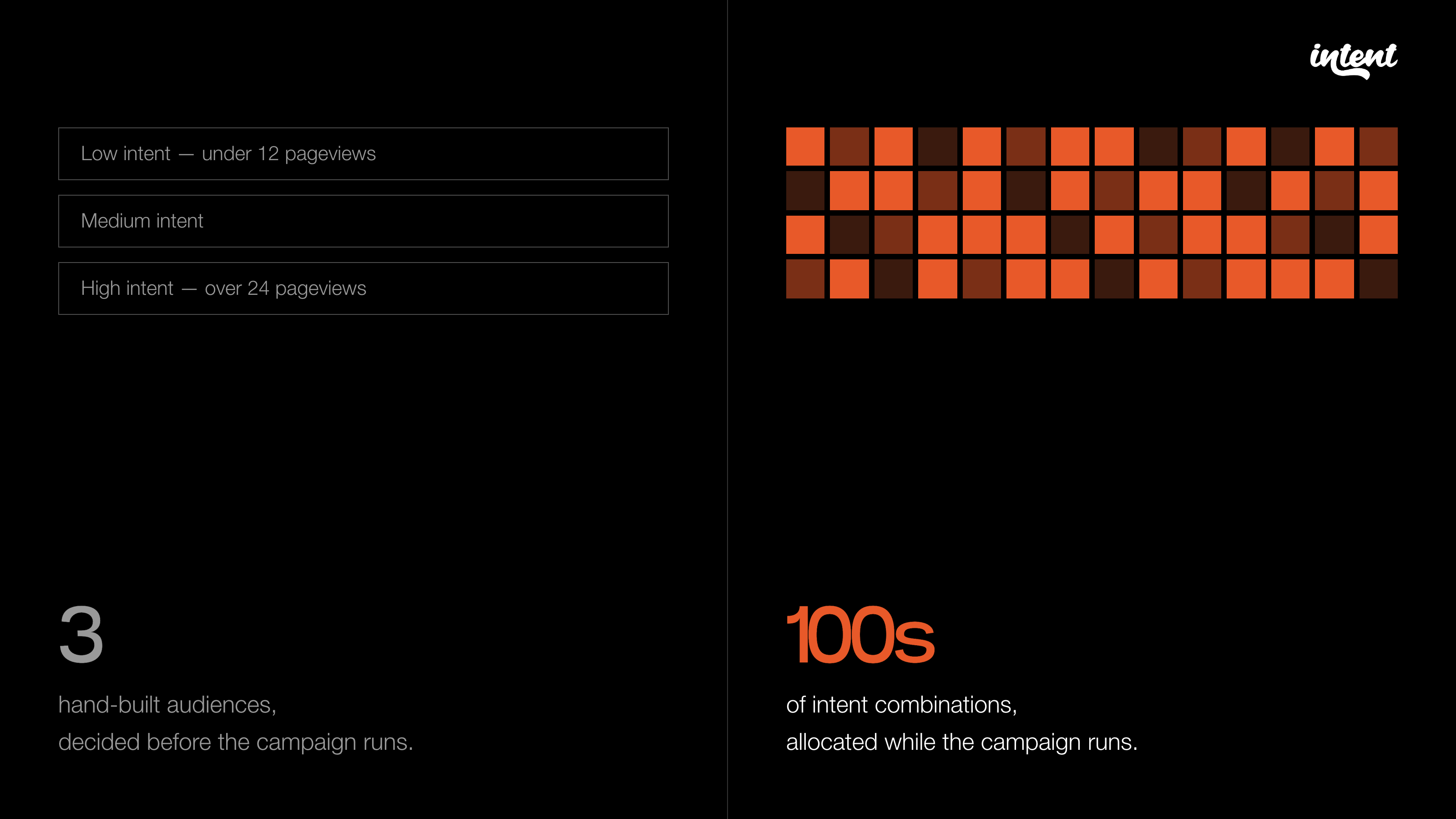
MandM tested five homepage recommendation strategies simultaneously. Rather than splitting traffic across two variants and waiting two weeks per test, Made With Intent's optimisation agent tested all five, across 157 unique segment combinations, and allocated each visitor to the strategy most likely to drive Ollie's defined commercial goal; revenue per user.
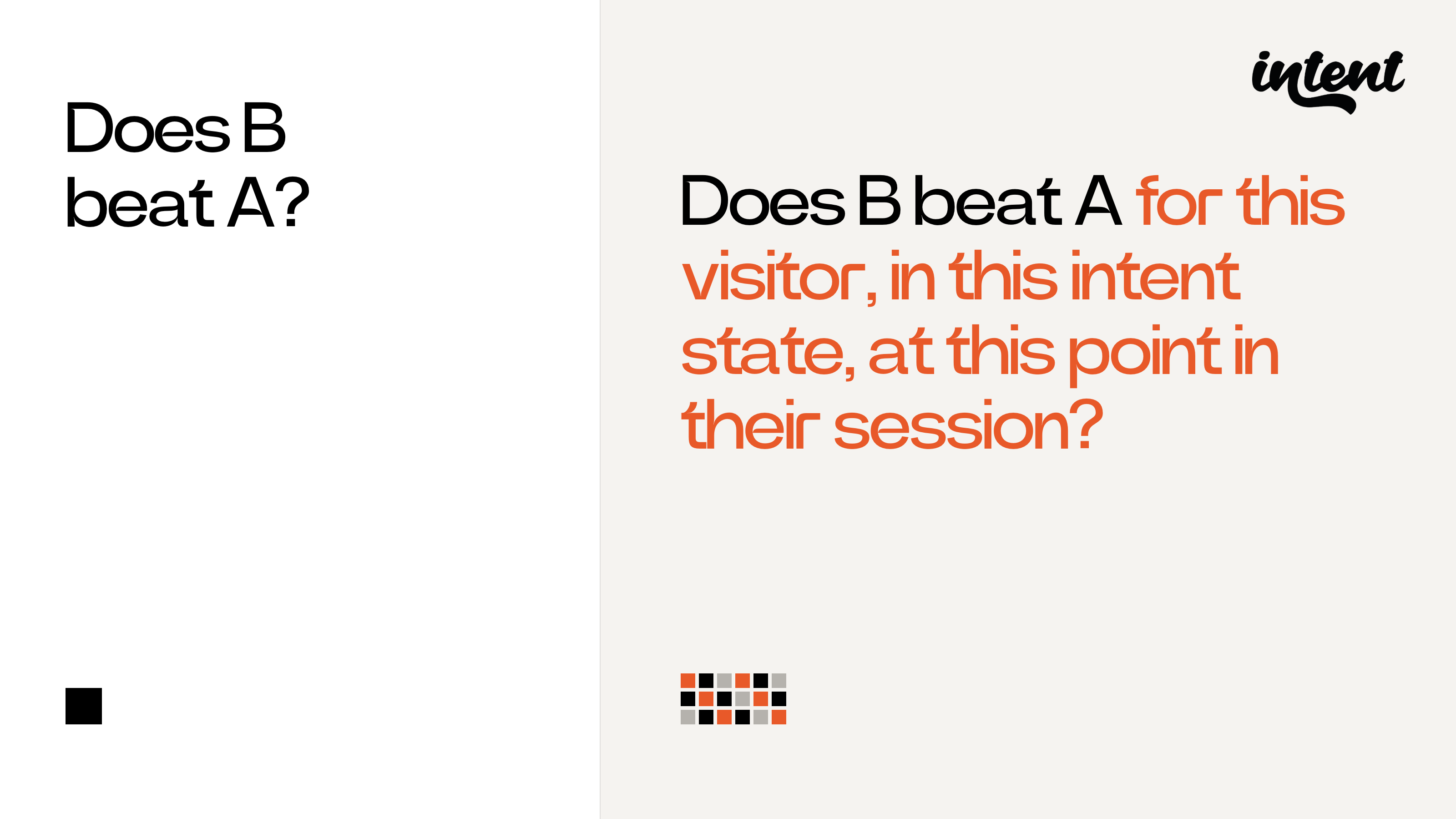
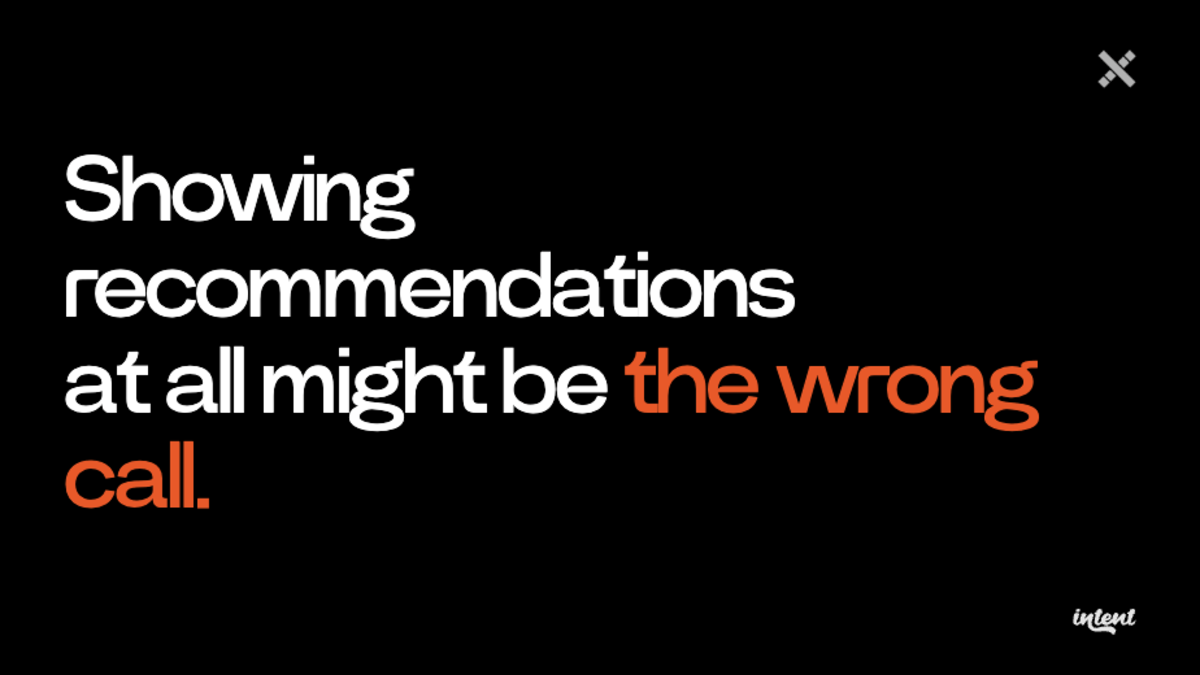
The result was a 2% increase in revenue per user. But the more valuable output was just how granular MandM could get. Not just "strategy X wins." For MandM it was strategy X wins for loyal mobile customers, strategy Y wins for new desktop visitors, and for your most engaged customers, showing recommendations at all might be the wrong call.
Let that sink in: showing recommendations at all might be the wrong call.
On the PDP, where new customers arriving from paid search land and recommendations have some of the most direct commercial impact, MandM ran a similar test with five strategies including a "hidden" variant (no recommendations shown at all). The result: 4% increase in revenue per user, from 130 unique segment combinations tested.
On the webinar, Colin Spooner, Principal Value Consultant, at Made With Intent, describes what this looks like inside the platform:
"There's kind of no winners or losers anymore. It just is the best experience to give that visitor at the right time."
Sometimes, doing nothing is the best strategy
In MandM's PDP test, 14% of visitors were allocated to seeing no recommendations at all, and for that segment, it was the highest-performing option.
That segment, as Ollie describes it, is your most loyal customers. The ones who know the site, know what they want, and don't need or want a carousel of "You might also like" items interrupting their path to purchase.
Ollie says: "For a certain subset of customers, your very loyal customers, the ones that know the site, they know what they want, removing recommendations is actually beneficial. Sometimes it can be a bit of a loop for a customer."
The PDP recommendation loop is a real issue. A customer lands on a PDP, clicks a recommendation to another PDP, clicks another, and ends up in a browse abandonment spiral that started as a purchase intent session. It's almost like you're giving them too much to navigate through.
Removing the recommendations breaks the loop and lets the customer do what they came to do.
This can be uncomfortable for personalisation teams to hear whose KPI is coverage, ensuring every visitor gets served something. But it reflects a more mature way of thinking about personalisation: not "show more" but "show what's right, when it's right."
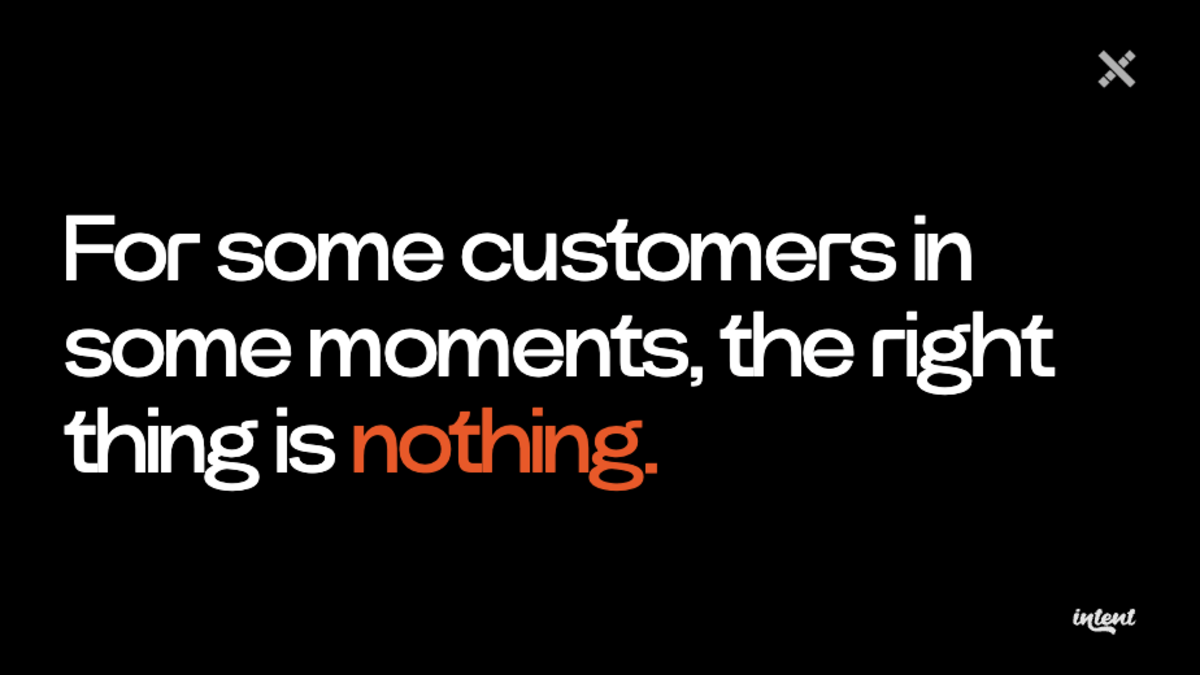
For some customers in some moments, the right thing is nothing.
What MandM's results point to
MandM's results across two distinct experiments expose the same fundamental flaw in how most onsite experiences are built. They're designed to give every customer an answer at predefined moments, when real impact is about giving each customer the right answer for their specific moment.
Rule-based email capture fires at step three of the journey regardless of whether the customer is engaged or about to leave. Sequential recommendation testing finds one winning strategy for one segment, then starts over.
Ollie used intent signals and agentic campaigns both push against that. One changes when you fire an experience based on real-time behavioural signals. The other changes what you show based on continuous, parallel testing across hundreds of segment combinations. The outcome, in both cases, is the same — fewer experiences wasted on the wrong customer in the wrong moment.
For MandM, the next step is applying agentic testing to placement-level messaging. So, buy now pay later, delivery propositions, app downloads, and letting our agent match messages to customer segments in real time across the same placements.
If you enjoyed this blog post, why don't you watch our Intent Live series over on YouTube? Failing that, we're going to be running these sessions frequently, so you can sign up here for our next session.
While we're doing CTAs, here's another one: If this has piqued your interest, why don't you book a demo with our team?

Become an Intent Insider
Get subscriber-only insights we don't publish anywhere else and event invites before anyone else.
By submitting this form you agree to our (more than fair) terms.